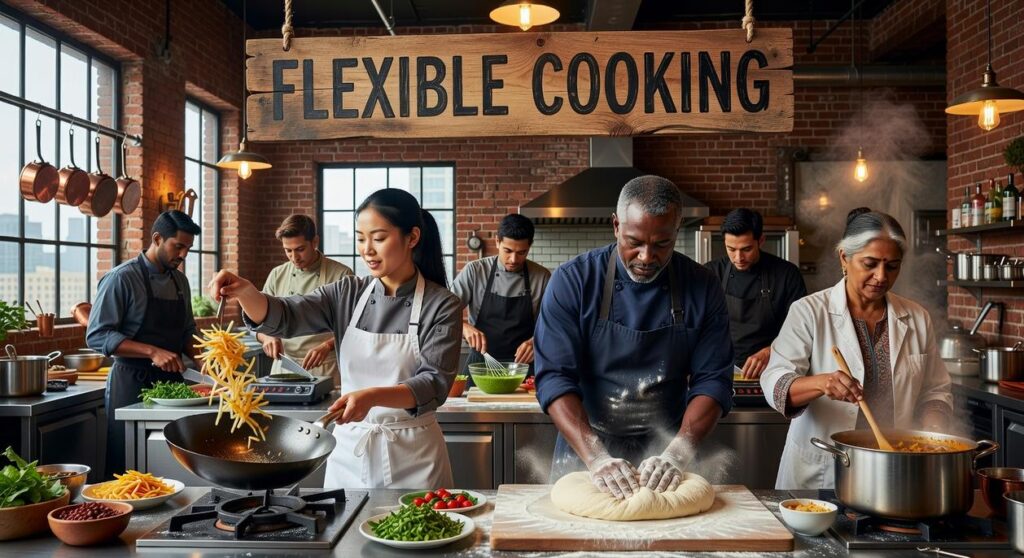
The “Use-It-Up” Meal: Mastering Flexible Recipes

Here’s the truth: rigid recipes are great for special occasions, but flexible ones win on busy weeknights. A “use-it-up” meal is exactly what it sounds like—a dish designed to absorb leftovers and still taste intentional (not like a culinary accident).
Frittata vs. Omelette:
Both transform odds and ends into dinner, but they behave differently. A frittata (an Italian egg dish started on the stove and often finished in the oven) welcomes bulk—handfuls of roasted vegetables, bits of cheese, stray herbs. An omelette, on the other hand, is quicker and more delicate, better for smaller portions. If your fridge looks chaotic, go frittata. If you’ve got just a few scraps, omelette wins.
Fried Rice vs. Soup:
The “clean-out-the-fridge” fried rice relies on a formula: day-old rice (drier grains fry better, according to Serious Eats), soy sauce, and aromatics like garlic or scallions. Toss in leftover chicken, tofu, or vegetables. Conversely, soups and stews are looser—sauté aromatics, add leftovers, cover with broth, and simmer.
That’s where flavor bases matter. Mirepoix (onion, carrot, celery), sofrito, or ginger-garlic-scallion make random ingredients taste cohesive.
Pro tip: keep frozen broth cubes on hand. And remember, smart reduce food waste cooking tips start with building meals that expect leftovers.
Your Kitchen, A Hub of Creativity and Efficiency
Your kitchen has the potential to be more than a place where meals are made—it can be a space where creativity and efficiency thrive side by side.
You came here looking for practical ways to waste less and cook smarter. Now you have a toolkit of globally inspired, battle-tested strategies that make that possible. With these reduce food waste cooking tips, you’re equipped to turn overlooked ingredients into flavorful opportunities.
There’s nothing more frustrating than tossing out wilted herbs, stale bread, or forgotten leftovers—especially knowing that it’s your hard-earned money going into the trash. But that frustration can be replaced with satisfaction. When you adopt a “whole ingredient” philosophy and treat scraps as building blocks for flavor, you don’t just save money—you become a more creative, intuitive cook.
The next time you’re about to discard a vegetable peel or a bread crust, pause and ask yourself: How can I transform this into something delicious? Start there. Your wallet—and your kitchen—will thank you.