
Curious about how to bring global flavors into your kitchen without booking a plane ticket? This guide is designed to help you explore the essential ingredients, techniques, and inspiration behind today’s most exciting international dishes—so you can cook with confidence and creativity at home.
From street food staples to refined classics, we break down the building blocks of world cuisine and show you how to recreate them with accessible ingredients and practical cooking hacks. Whether you’re experimenting with spices from North Africa, sauces from East Asia, or plant-based international cuisine, you’ll find clear guidance tailored to your skill level and taste preferences.
Our insights draw on extensive culinary research, tested recipes, and global food traditions to ensure accuracy and authenticity. In this article, you’ll discover must-know pantry essentials, smart fusion ideas, and technique upgrades that transform everyday meals into vibrant, globally inspired experiences.
A global feast awaits you, no passport required. If you think meatless means bland salads, think again. Across India, Ethiopia, Mexico, and the Mediterranean, plants have always anchored iconic dishes. I recommend starting with chana masala, smoky lentil stews, or hearty mushroom tacos. Focus on techniques: bloom spices in oil, layer acids like lime or tamarind, and build umami with fermented pastes. Try:
- Berbere-spiced vegetables with injera
- Coconut curry with toasted mustard seeds
- Mezze spreads rich in tahini
Think of plant-based international cuisine as culinary time travel (Anthony Bourdain would approve). Stock global spices, cook boldly, repeat.
The Heart of Asia: Ancient Traditions, Modern Flavors
Asia’s most beloved cuisines have always been naturally plant-forward, long before it became trendy. The benefit? You get layers of flavor, vibrant color, and nourishing ingredients—without relying on heavy meats or processed shortcuts. (Your taste buds and your energy levels both win.)
Thai Cuisine Spotlight: Green Curry
A classic Thai Green Curry is a masterclass in balance. Coconut milk brings creaminess, galangal adds citrusy warmth, lemongrass lifts the aroma, and Thai basil finishes with a peppery sweetness. The payoff for you? A deeply satisfying dish that feels indulgent yet fresh.
Want a plant-based twist? Make a vegan “fish” sauce using soy sauce, sautéed mushrooms, and a strip of seaweed. This combo delivers umami—that savory, mouth-filling depth identified by Japanese chemist Kikunae Ikeda in 1908 (Journal of the Chemical Society). Pro tip: simmer the seaweed briefly, then remove it to avoid bitterness.
Indian Cuisine Essentials: Chana Masala
Chana Masala turns humble chickpeas into bold comfort food. The secret is tadka—tempering spices in hot oil to release fat-soluble flavor compounds (Harvard T.H. Chan School of Public Health). Cumin, coriander, turmeric, and garam masala bloom instantly, creating complexity in minutes. The benefit? Maximum flavor from pantry staples.
Japanese Simplicity: Vegetable Tempura
Perfect tempura relies on ice-cold water and minimal mixing to limit gluten formation, ensuring a light, crisp shell. Dip into tentsuyu, enriched with kombu and shiitake for natural umami. Master this, and plant-based international cuisine becomes effortlessly elegant—crispy, delicate, and deeply satisfying.
Mediterranean Sunshine on a Plate
There’s something about Mediterranean cooking that feels like a postcard you can eat. I’ve always believed the best dishes come from necessity, not luxury—and nowhere proves that better than Italy, Greece, and the Levant.
Italian Peasant Food, Elevated
Cucina Povera (literally “poor kitchen”) is the art of making humble ingredients sing. Ribollita, a Tuscan bread soup, is my favorite example. You start with a soffritto—a slow-cooked mix of onions, carrots, and celery that forms the flavor base of countless Italian dishes. Add cannellini beans, cavolo nero, tomatoes, and broth. Then comes the magic: stale bread stirred in until it thickens the soup into something hearty and almost stew-like (who knew leftovers could taste this luxurious?).
Some argue peasant food is too simple to impress. I disagree. When done right, simplicity is the flex. Pro tip: let ribollita rest overnight—the flavors deepen dramatically (Science backs this up; flavor compounds continue to meld over time, according to food chemistry research).
Greek Island Flavors
A mezze platter is edible hospitality. For me, the essentials are Fava (a silky yellow split pea dip), smoky Melitzanosalata (eggplant blended with lemon and garlic), and bright Dolmades—grape leaves wrapped around herbed rice. The contrast of creamy, tangy, and briny flavors makes every bite feel intentional.
Levantine Delights
Beyond hummus lies Muhammara, a roasted red pepper and walnut dip. Pomegranate molasses adds sweet-tart depth, while Aleppo pepper brings gentle heat. The balance is unforgettable.
If you’re exploring plant-based international cuisine, this region is your playground. For more inspiration, explore seasonal ingredients making waves across continents.
Simple ingredients. Bold flavors. Timeless comfort.
Latin American Fiesta: Bold, Spicy, and Plant-Powered
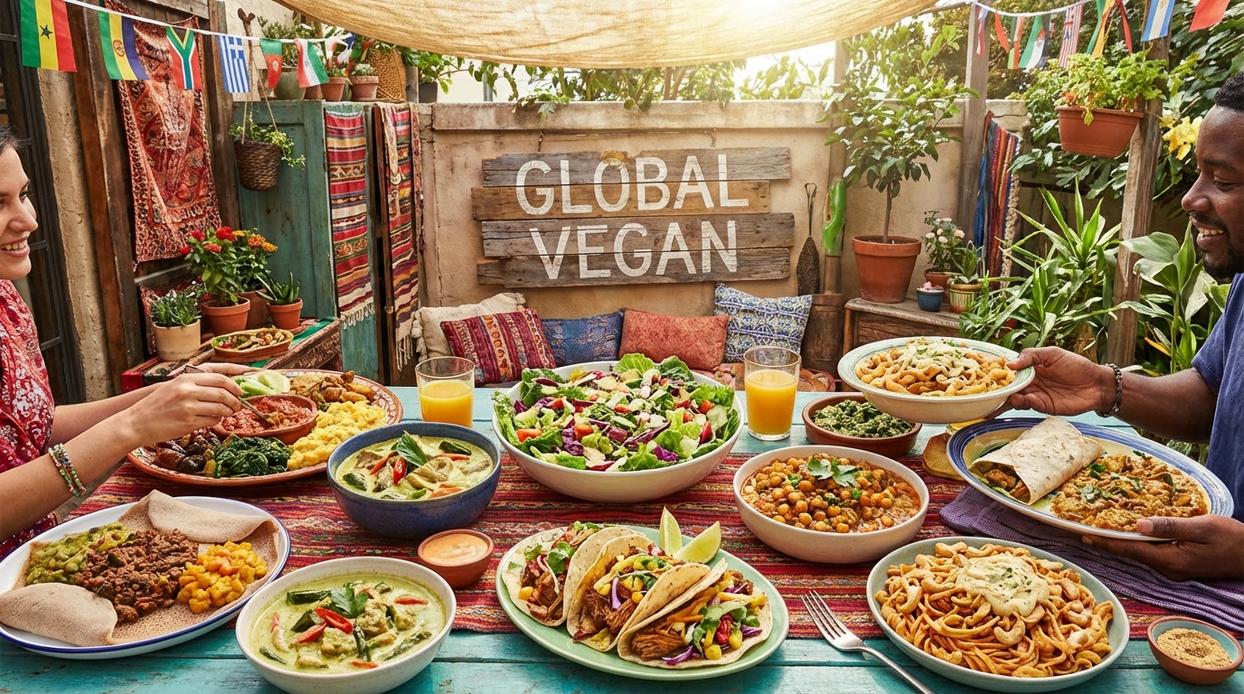
There’s something magical about Latin American comfort food—the kind that stains your fingers, perfumes the air with cumin and garlic, and demands a second helping. I’m convinced you don’t need meat to capture that magic (and honestly, the flavors are bold enough to carry the show on their own).
Mexican Street Food Reimagined
Jackfruit Carnitas Tacos are my go-to proof. Young green jackfruit (an unripe fruit with a neutral flavor and shreddable texture) mimics pulled pork when properly prepared. Drain, rinse, and shred it well, then pan-fry until the edges crisp. That caramelization is non-negotiable. Top with pickled red onions, fresh cilantro, and a silky dairy-free avocado crema. The contrast—tangy, herby, creamy—is what makes it unforgettable (and yes, messy in the best way).
Caribbean Heartiness, No Compromises
Ropa Vieja traditionally relies on slow-cooked beef, but shredded mushrooms or hearts of palm absorb flavor beautifully. The backbone is sofrito (a sautéed blend of aromatics), adobo seasoning, and briny olives. Some argue mushrooms lack depth. I disagree. When simmered long enough, they soak up every smoky, tomato-rich note.
| Dish | Plant Base | Signature Flavor |
|——|————|—————–|
| Carnitas Tacos | Jackfruit | Citrus & chili |
| Ropa Vieja | Mushrooms | Sofrito & olives |
| Ceviche | Mushrooms | Lime & aji amarillo |
Peruvian Freshness with Bite
Mushroom Ceviche wins me over every time. Lime juice “cooks” the mushrooms through acid denaturation (breaking down proteins without heat). Balance sharp acidity with aji amarillo heat and crunchy choclo. In plant-based international cuisine, texture is everything—and here, it sings.
Your Culinary Adventure Awaits
We’ve journeyed from India’s spice-laden dals to Peru’s bright, citrusy ceviche made with hearts of palm. So what’s next? Choice.
On one hand, you could chase substitutes—plant-based burgers that mimic beef (impressive, sure, but often highly processed). On the other, you could lean into tradition: chana masala built on toasted cumin and coriander, or a Tuscan ribollita thickened with cannellini beans. A vs. B. Imitation vs. celebration.
The real magic of plant-based international cuisine lies in technique. Tempering (briefly frying spices in hot oil to unlock aroma) transforms simple lentils into something cinematic—yes, Ratatouille-level transformative. Meanwhile, fermentation, used in foods like miso and injera, boosts flavor and gut-friendly compounds (National Institutes of Health, 2020).
Admittedly, some argue substitutes make transition easier. Fair. But centuries-old culinary systems prove plants were always enough.
So, this week, pick one region. Stock one new spice or sauce. Pro tip: start with a versatile staple like tahini—it bridges savory and sweet effortlessly. Your kitchen passport awaits.
Bring Global Flavor Into Your Everyday Cooking
You started this journey wanting to explore new flavors, techniques, and cultural dishes without feeling overwhelmed — and now you have the tools to do exactly that. From mastering simple spice pairings to experimenting with plant-based international cuisine, you’re equipped to turn everyday meals into globally inspired experiences.
The biggest frustration home cooks face isn’t lack of passion — it’s running out of ideas and falling back into the same routine dishes. That’s how excitement in the kitchen fades. But with the right guidance and flavor inspiration, cooking becomes creative, adventurous, and deeply satisfying again.
Now it’s time to take action. Pick one new international recipe this week. Try one unfamiliar spice. Experiment with a fusion twist on a comfort classic. Small steps lead to bold results.
If you’re ready to break out of boring meals and confidently explore world flavors, dive deeper with Jalbite World Food — a trusted source for global recipes, technique hacks, and flavor inspiration. Start cooking smarter, bolder, and more creatively today.