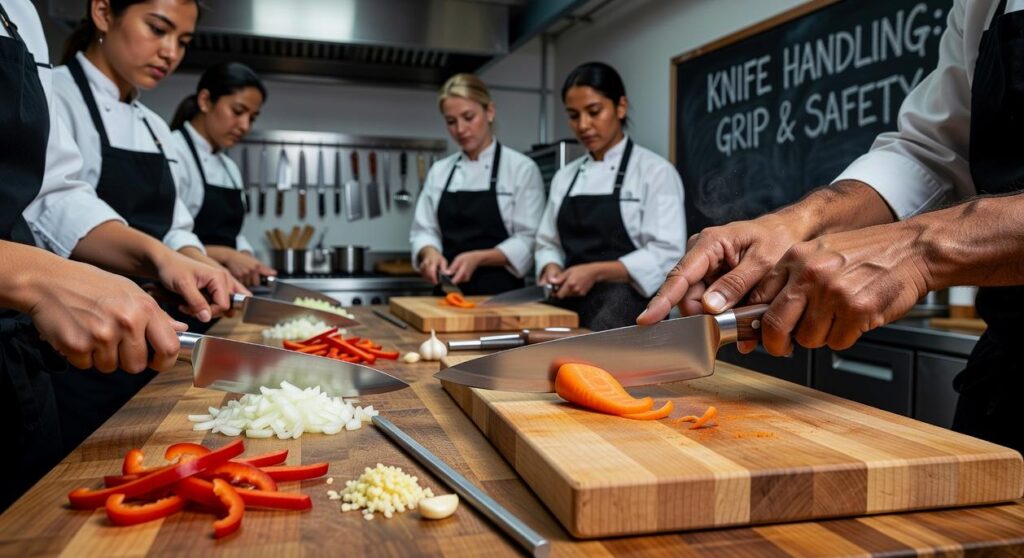
Mastering knife skills for beginners is one of the fastest ways to level up your cooking. Whether you’re just starting out or looking to build confidence in the kitchen, understanding how to hold, handle, and control a knife properly can transform your speed, safety, and precision. Many home cooks struggle with uneven cuts, slow prep time, or even minor injuries—all of which come down to technique.
This article is designed to give you a clear, practical foundation in essential knife skills. You’ll learn the core cuts every cook should know, how to choose and care for your knife, and simple drills to improve consistency. Our guidance draws from professional culinary standards, classic kitchen training methods, and globally inspired cooking practices to ensure techniques that work across cuisines.
By the end, you’ll not only feel more confident with a knife in hand—you’ll prep ingredients faster, cook more evenly, and enjoy the process far more.
Unlock Your Kitchen Potential: Why Knife Skills Are Your First Step
Great cooking begins before the pan even heats up. In fact, a study from the Journal of Culinary Science & Technology found that uniform cuts improve cooking consistency and flavor distribution. Yet many home cooks struggle with speed and safety.
That’s where knife skills for beginners come in. Mastering fundamentals means learning:
- The proper grip (pinch the blade, not the handle)
- The “claw” technique to protect fingers
- How to create even slices, dice, and julienne cuts
As a result, prep becomes faster, safer, and surprisingly satisfying (yes, chopping onions can feel therapeutic). Start here, and everything else follows.
The Chef’s Toolkit: Your Essential Knife and a Safe Workspace
I still remember the first time I tried chopping onions with a dull, tiny knife. It slipped, I panicked, and dinner was late (and slightly uneven). That’s when I learned the power of one good 8-inch chef’s knife.
Why this knife? It’s the most versatile blade in any kitchen. The heel (the back, wider part of the blade) powers through dense foods like squash. The tip handles delicate tasks like mincing garlic. The belly (the curved middle) allows a smooth rocking motion for herbs. Mastering these three parts builds confidence fast—especially when practicing knife skills for beginners.
But a great knife needs a proper partner: a large, stable cutting board. Wood or plastic boards are ideal because they’re softer than glass or stone, which can dull your blade quickly (and no one wants to fight their knife). According to culinary safety guidelines from the USDA, stable prep surfaces reduce accident risks.
Here’s the single most important safety hack:
- Place a damp paper towel under your cutting board to prevent slipping.
Finally, check your stance. Stand upright, shoulders relaxed, elbows slightly bent. Good posture reduces fatigue and improves control (your back will thank you). Pro tip: if you’re leaning, your board may be too low.
The Foundation: How to Properly Hold Your Knife and Food
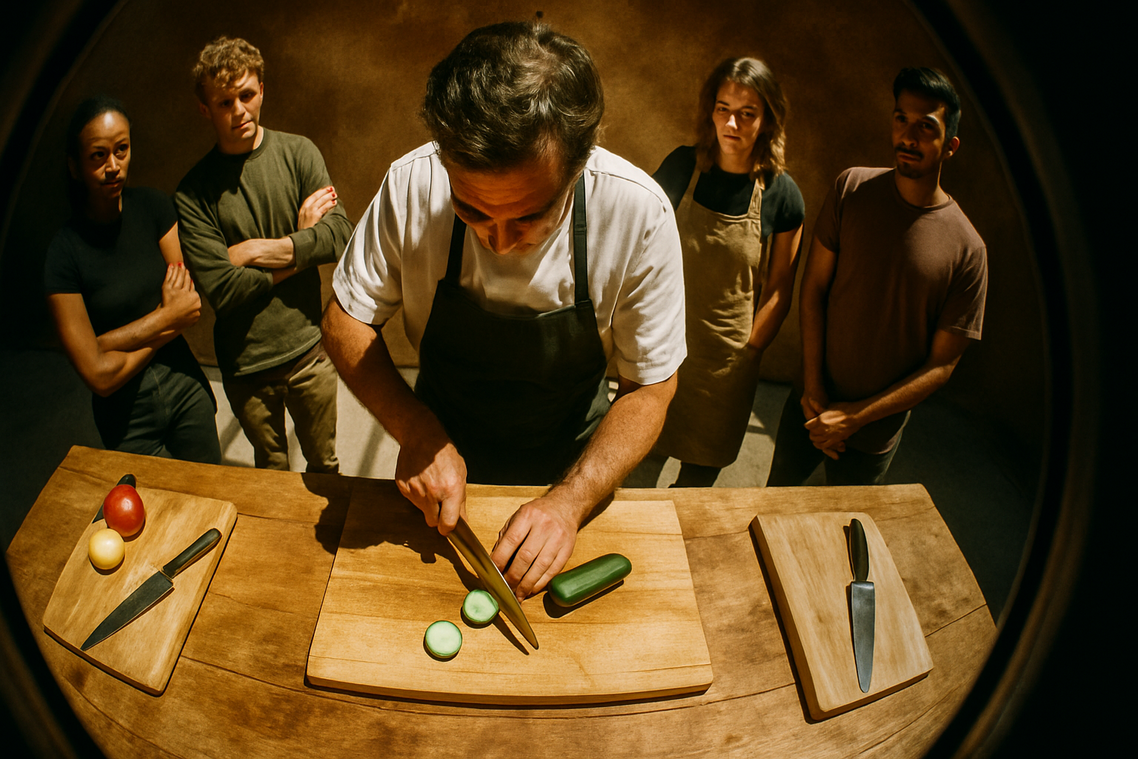
Mastering knife skills for beginners starts with control and safety. According to the U.S. Consumer Product Safety Commission, thousands of kitchen injuries each year stem from improper handling—so technique isn’t just chef-y flair (it’s self-preservation).
-
The Pinch Grip
First, pinch the blade—not the handle—with your thumb and index finger, just above the handle. Then wrap your remaining fingers around the handle. This shifts control forward, increasing stability and reducing wrist fatigue. Culinary schools teach this because it improves precision and speed (watch any cooking competition and you’ll spot it instantly). -
The “Claw” Grip
Next, curl your fingertips inward on your guiding hand. Let your knuckles face the blade and act as a guardrail. Research on hand injuries shows fingertip exposure is a leading cause of cuts—this grip minimizes that risk. -
Create a Flat Surface
Finally, slice a thin piece off round vegetables to form a stable base. A flat surface reduces rolling, which means fewer slips and cleaner cuts.
The Four Fundamental Cuts Every Cook Should Know
Mastering a few foundational knife techniques can transform your confidence in the kitchen. In fact, many professional chefs argue that technique matters more than fancy equipment (and they’re not wrong). So let’s break down the four essentials that form the backbone of knife skills for beginners and seasoned cooks alike.
The Slice
First and foremost, the slice is the most basic motion. It’s a forward-and-down movement, using the belly of the knife in a gentle rocking arc. Picture cutting a carrot: the tip touches the board first, then the blade rolls down and through. This rocking motion—where the curved part of the blade does most of the work—creates smooth, even pieces. Over time, consistent slices mean even cooking (no more half-raw, half-mushy stir-fries).
The Dice
Next, we build on the slice to create the dice—uniform cubes that cook evenly and look polished. With an onion, start by slicing it into planks (flat sheets). Then cut those planks into sticks, also called batons. Finally, rotate and cut across to form cubes. Uniformity is key here; evenly sized dice ensure balanced flavor distribution in soups or salsas. Some skeptics say perfect cubes are unnecessary at home. However, consistent sizing directly affects cooking time and texture, according to culinary science principles (CIA textbooks emphasize uniform cuts for heat distribution).
The Julienne
Meanwhile, the julienne creates thin matchsticks, often from bell peppers or carrots. Precision is everything. Cut into planks, stack them, then slice into fine strips. This cut is common in global fusion dishes and fresh slaws. Looking ahead, as plant-based cuisine continues to rise (a trend noted by Statista’s food industry reports), expect julienned vegetables to become even more central in home kitchens.
The Mince
Finally, the mince produces tiny, irregular pieces—ideal for garlic and ginger. After rough chopping, use the rocking chop technique: keep your guiding hand on the spine of the blade and pivot the knife repeatedly over the pile. The result? Maximum flavor release. And once you’ve nailed these cuts, you’ll be ready to level up with techniques like how to master the art of searing meat perfectly.
Keeping Your Edge: Basic Knife Care and Honing
A quality knife is an investment, not a disposable gadget (yes, even if it survived that late-night frozen pizza incident). Clean and dry immediately after use. Dishwashers blast high heat, harsh detergent, and jostling water that can dull edges and cause corrosion. Hand-washing with mild soap preserves the blade’s temper—its heat-treated hardness—and immediate drying prevents rust spots from forming.
Proper storage protects both your edge and your fingers. A knife block, magnetic strip, or blade guard keeps the cutting edge from knocking against hard surfaces. Less impact means longer sharpness and fewer accidental nicks.
Honing vs. sharpening: Honing realigns the microscopic edge without removing metal; sharpening grinds away steel to create a new edge. Hone frequently, sharpen sparingly.
How to use a honing steel:
- Hold steel vertically on a stable surface.
- Set blade at a 15–20° angle.
- Sweep heel to tip, alternating sides 5–8 times.
Mastering this supports knife skills for beginners and keeps every slice precise.
Your Next Steps to Culinary Confidence
Now that you’ve built the basics, it’s time to move. In my opinion, confidence in the kitchen doesn’t come from fancy recipes; it comes from repetition. The frustration of uneven chunks and snail-paced prep? Gone—if you practice.
Because you’ve focused on safety (the claw grip) and control (the pinch grip and rocking motion), you’ve created a foundation that makes knife skills for beginners actually stick.
Next, do this:
- Grab an onion, steady your board, and practice a clean dice.
Soon enough, speed follows consistency. And honestly, that’s when cooking starts feeling fun again.
Bring Global Flavors to Life in Your Kitchen
You came here to master the essentials of global cuisine and feel more confident experimenting with international flavors. Now you have the inspiration, techniques, and practical tips to start creating dishes that taste authentic and exciting.
If you’ve ever felt overwhelmed by unfamiliar ingredients or unsure about where to begin, remember this: great cooking starts with strong foundations. Sharpening your knife skills for beginners, understanding flavor pairings, and practicing simple fusion recipes will instantly elevate your results.
Don’t let uncertainty keep you from exploring the world through food. Start with one new cuisine this week. Try one new spice blend. Practice one new technique. Small steps lead to bold flavors.
Ready to cook with confidence and creativity? Explore more global recipes, technique guides, and flavor inspiration now—and turn your kitchen into a passport to the world.