# SEARING MEAT LIKE A PRO: A CHAOTIC HOW-TO GUIDE

Okay, so you're standing there, staring at your beautifully marbled steak, and you're thinking: How do I get that perfectly seared crust without turning it into shoe leather? TRUST ME, I've been there. Searing, it’s an art and science, both terrifying and rewarding. Let's break it down as chaotically as possible.

### THE SCIENCE OF SEARING

Why do we sear? Because of the Maillard reaction. It sounds like something from a chemistry exam, and, well, it kind of is. It's where amino acids and sugars meet, dance a little, get heated, and develop that rich, brown crust. This is what you want. It’s not just about looks; it’s about FLAVOR EXPLOSION.

Important: Moisture is the enemy. Water makes things steam, not sear. Dry your meat thoroughly. REMEMBER THIS!

### EQUIPMENT - THE GREAT DEBATE

- **Cast Iron Pan**: Retains heat like a dream. It doesn't care about your fears or feelings.
- **Stainless Steel**: A wild card, more forgiving, but not as mean.
- **Non-Stick**: Nope. Not today, friend.

### CHAOS IN COOKING: TEMPERATURES & TIMINGS

**High heat, short time**. That's the mantra. You blast the heat, you sizzle, you triumph. But how do you know the right temp? Do you use a thermometer? Maybe. Or maybe you just follow the **1-Mississippi, 2-Mississippi rule** when hovering your hand above the pan.

#### TEMPERATURE

- **Beef**: 350-400°F (176-204°C)
- **Poultry**: Slightly lower, to avoid rubbery results.
- **Pork**: Somewhere in the middle, treat it with respect.

#### SEARING TIMES: THE ART OF TIMING

- **Steak**: 1-2 minutes per side
- **Chicken Thighs**: 4-5 minutes
- **Pork Chops**: 3-4 minutes

### THE METHOD (OR LACK THEREOF)

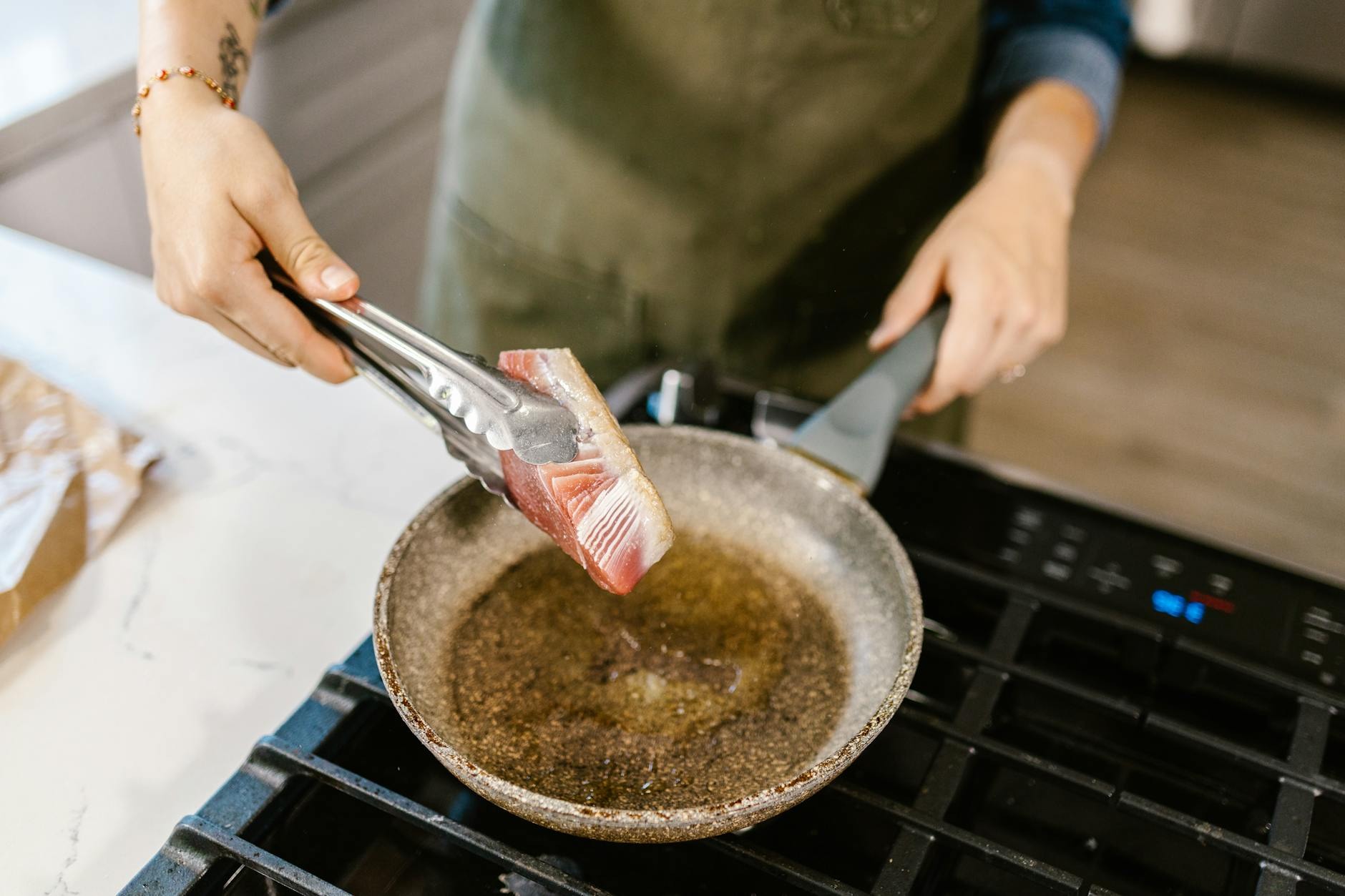
1. **Heat the Pan**: SCREAMING HOT! You should be afraid to touch it.
2. **Add Oil**: Just enough to coat. NOT a swimming pool.
3. **Season Meat**: Salt, pepper, simplicity. Go wild if you wish.
4. **Sear Without Surface Contact Freakout**: Let it sit. Walk away if you must, to resist the urge.

I once knew someone who poked their steak every ten seconds. It was a disaster

. Don’t be them.

### COOKING VARIABLES

- **Thickness**: Thicker cuts need lower heat and longer, indirect cooking. You can't rush thickness.
- **Resting**: Patience is a virtue. Let it rest. Its juices will recirculate—science, baby!
- **Baste for Fun**: Butter, herbs, garlic—a symphony on your tongue.

### TROUBLESHOOTING: UNPREDICTABLE MOMENTS

- **If smoking too much**: Lower heat or change oil.
- **Overcooked?**: Learn. Start again. Smaller steps.
- **Undercooked?**: Oven is your friend. Finish it there.


      Problem
      Solution


      Meat Sticking
      More oil or let it release


      Uneven Sear
      Preheat better or adjust flame


      Bland Taste
      Season aggressively


### THE FLIP - NOT A PANCAKE

Listen, there's debate. Flip once or flip often? I say, let the crust dictate your actions. If it’s ready to let go, it will. But if you feel the rebellious need, go ahead and flip often. Just do it with PURPOSE.

### FAQs: RANDOM WISDOM

- **Can I use butter instead of oil?**
  Sure! Just watch it doesn't burn. Brown butter is fancy but finicky.

- **How do I know when it's done?**
  Use a thermometer, or trust your gut. Medium-rare? 130°F (54°C). Well done? We won't talk about that.

- **What's the best cut?**
  Personal. Ribeye for flavor, filet for tenderness. You do you.

Let’s wrap it with a sentiment: Searing is more than a culinary technique; it’s a journey of patience, learning, and the joy of sizzling success. There's no 'one-size-fits-all'. Experiment, fail, succeed, and EAT.

Is our chaotic guide complete? Hardly. There’s more to explore, more to sear, more to taste. But now, you're armed with enough randomness to face your next culinary adventure with wild abandon and maybe a little more confidence. Keep your eye on the prize—THE PERFECT CRUST.

(And remember, the best cooks are those who occasionally burn things. It’s how we learn.)

Go forth and sear with wild, relentless passion.

Now, I’m off to sear my breakfast steak. Yes, breakfast. You should too.
Ismaeler Lennoncier writes the kind of world flavor inspirations content that people actually send to each other. Not because it's flashy or controversial, but because it's the sort of thing where you read it and immediately think of three people who need to see it. Ismaeler has a talent for identifying the questions that a lot of people have but haven't quite figured out how to articulate yet — and then answering them properly.
They covers a lot of ground: World Flavor Inspirations, Cooking Technique Hacks, Culinary Pulse, and plenty of adjacent territory that doesn't always get treated with the same seriousness. The consistency across all of it is a certain kind of respect for the reader. Ismaeler doesn't assume people are stupid, and they doesn't assume they know everything either. They writes for someone who is genuinely trying to figure something out — because that's usually who's actually reading. That assumption shapes everything from how they structures an explanation to how much background they includes before getting to the point.
Beyond the practical stuff, there's something in Ismaeler's writing that reflects a real investment in the subject — not performed enthusiasm, but the kind of sustained interest that produces insight over time. They has been paying attention to world flavor inspirations long enough that they notices things a more casual observer would miss. That depth shows up in the work in ways that are hard to fake.
We use cookies to ensure that we give you the best experience on our website. If you continue to use this site we will assume that you are happy with it. Privacy policy



 Ismaeler Lennoncier writes the kind of world flavor inspirations content that people actually send to each other. Not because it's flashy or controversial, but because it's the sort of thing where you read it and immediately think of three people who need to see it. Ismaeler has a talent for identifying the questions that a lot of people have but haven't quite figured out how to articulate yet — and then answering them properly.
They covers a lot of ground: World Flavor Inspirations, Cooking Technique Hacks, Culinary Pulse, and plenty of adjacent territory that doesn't always get treated with the same seriousness. The consistency across all of it is a certain kind of respect for the reader. Ismaeler doesn't assume people are stupid, and they doesn't assume they know everything either. They writes for someone who is genuinely trying to figure something out — because that's usually who's actually reading. That assumption shapes everything from how they structures an explanation to how much background they includes before getting to the point.
Beyond the practical stuff, there's something in Ismaeler's writing that reflects a real investment in the subject — not performed enthusiasm, but the kind of sustained interest that produces insight over time. They has been paying attention to world flavor inspirations long enough that they notices things a more casual observer would miss. That depth shows up in the work in ways that are hard to fake.
Ismaeler Lennoncier writes the kind of world flavor inspirations content that people actually send to each other. Not because it's flashy or controversial, but because it's the sort of thing where you read it and immediately think of three people who need to see it. Ismaeler has a talent for identifying the questions that a lot of people have but haven't quite figured out how to articulate yet — and then answering them properly.
They covers a lot of ground: World Flavor Inspirations, Cooking Technique Hacks, Culinary Pulse, and plenty of adjacent territory that doesn't always get treated with the same seriousness. The consistency across all of it is a certain kind of respect for the reader. Ismaeler doesn't assume people are stupid, and they doesn't assume they know everything either. They writes for someone who is genuinely trying to figure something out — because that's usually who's actually reading. That assumption shapes everything from how they structures an explanation to how much background they includes before getting to the point.
Beyond the practical stuff, there's something in Ismaeler's writing that reflects a real investment in the subject — not performed enthusiasm, but the kind of sustained interest that produces insight over time. They has been paying attention to world flavor inspirations long enough that they notices things a more casual observer would miss. That depth shows up in the work in ways that are hard to fake.