If you’re searching for practical ways to elevate your home cooking with global flavors, you’re in the right place. This article is designed to help you master essential techniques, discover international fusion ideas, and bring authentic world cuisine into your kitchen with confidence. Whether you want to refine your spice layering, experiment with cross-cultural recipes, or perfect searing meat techniques, you’ll find clear, actionable guidance tailored to real-world cooking.
We’ve drawn on culinary research, traditional preparation methods, and insights from globally respected food experts to ensure the techniques shared here are both authentic and adaptable. Instead of vague inspiration, you’ll get focused explanations that show you not just what to do, but why it works.
By the end, you’ll understand how to balance bold flavors, apply professional-level cooking hacks, and turn everyday ingredients into dishes inspired by kitchens around the world.
The Science of Sizzle: Why Searing Creates Deep Flavor
That dramatic sizzle when steak hits a hot pan isn’t just kitchen theater—it’s chemistry performing a fireworks show. The Maillard Reaction is a complex chemical reaction between amino acids (the building blocks of protein) and natural sugars in food. When high heat is applied, these molecules rearrange themselves into entirely new compounds, creating deep browning and layered flavor. Think of it like turning simple Lego bricks into an intricate castle.
Many people confuse this with caramelization, but they’re not twins. Caramelization involves sugars alone breaking down under heat, while the Maillard Reaction requires both protein and sugar. That’s why bread crust, roasted coffee, and a well-seared steak share that irresistible aroma (your nose knows before your brain catches up).
As heat transforms the meat’s surface, hundreds of new flavor compounds emerge—nutty, savory, slightly smoky notes that simply don’t exist in raw meat. It’s culinary alchemy.
The reaction also creates the crave-worthy crust. That crisp, brown exterior contrasts with the tender interior like a perfectly toasted marshmallow—crackly shell, soft center. Mastering searing meat techniques is essential for this balance, much like understanding heat control in one pan cooking techniques for easy cleanup. Without that contrast, a steak is just… warm beef (and nobody lines up for that).
Your Searing Success Starts Before the Heat
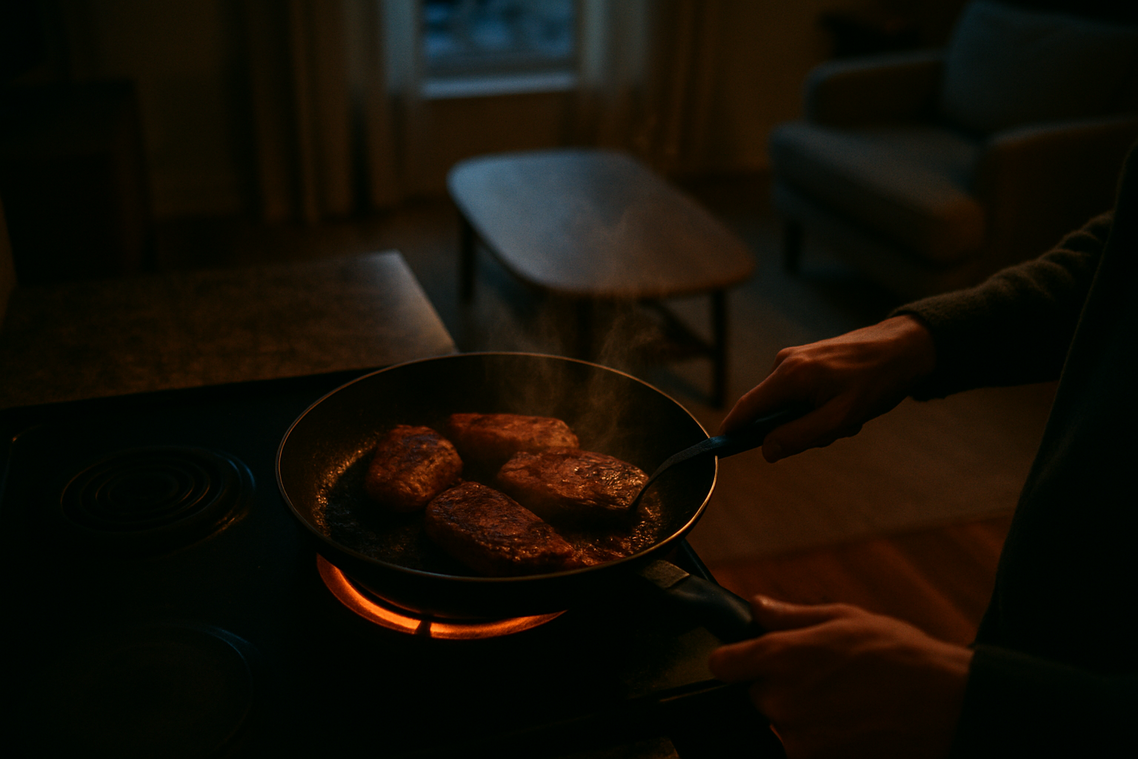
Great browning isn’t luck—it’s physics. Priority #1: A Bone-Dry Surface. Moisture is the enemy because water must evaporate before browning can begin. That evaporation creates steam, and steam caps surface temperature at 212°F (100°C), far below the 300°F+ needed for the Maillard reaction—the chemical process that creates deep flavor and crust (McGee, On Food and Cooking). Pat meat thoroughly dry with paper towels until no visible moisture remains. (Yes, it feels excessive. Do it anyway.)
The Role of Seasoning. Salt does more than add flavor. It draws surface moisture outward through osmosis. If you’re cooking immediately, salt right before the meat hits the pan to pull out last-minute moisture, then pat dry again if needed. For thicker cuts, dry-brining—salting 1–24 hours ahead—allows salt to penetrate and reabsorb, improving tenderness and moisture retention. A 2012 study in the Journal of Food Science found pre-salting improved juiciness in cooked meats.
Temper Your Meat. Let meat rest at room temperature for 20–30 minutes. Cold meat lowers pan temperature, delaying browning and increasing sticking. Even slight tempering promotes uniform cooking and better crust formation.
| Step | Why It Matters | Result |
|——|—————-|——–|
| Pat Dry | Removes surface water | Faster browning |
| Salt Smartly | Controls moisture | Better crust |
| Temper | Stabilizes heat transfer | Even cook |
Some argue tempering is unnecessary. In practice, consistent searing meat techniques show warmer meat sears more efficiently. Pro tip: Use a preheated cast-iron skillet for maximum heat retention.
Mastering the Pan: Heat, Fat, and Technique
I used to think a good sear was about luck. Crank the stove, toss in a steak, hope for that steakhouse crust. Instead, I got pale meat, smoking oil, and a kitchen that smelled like regret. The problem wasn’t the meat. It was my pan, heat control, and impatience.
Choosing the Right Cookware
Not all pans are built for high heat. Cast iron excels at heat retention (it stays hot once heated), making it ideal for thick cuts. Carbon steel heats faster and responds quickly to temperature changes—great when timing matters. Heavy-bottomed stainless steel distributes heat evenly, reducing hot spots.
Non-stick pans, despite their convenience, break down at high temperatures and prevent the fond (those browned bits packed with flavor) from forming. I learned this the hard way when my “easy cleanup” pan gave me gray, lifeless chicken.
The Importance of High, Consistent Heat
Preheating is non-negotiable. Let the pan heat until it shimmers or a drop of water evaporates instantly. That rapid evaporation signals the surface is hot enough for immediate browning. Skip this step, and you’ll steam instead of sear. (Yes, I’ve stood there poking at meat, wondering why it’s sweating.)
Selecting the Right Fat
Use high-smoke-point fats like grapeseed oil, avocado oil, or clarified butter. A smoke point is the temperature at which fat begins to burn. The right fat ensures even contact between meat and metal, filling microscopic gaps so browning happens uniformly.
The Two Golden Rules
- Don’t crowd the pan. Overcrowding traps moisture and causes steaming. Cook in batches if needed.
- Don’t touch the meat. Leave it undisturbed so a deep crust can develop before flipping.
Master these fundamentals and searing meat techniques stop feeling mysterious and start feeling repeatable.
Bring Global Flavor Into Your Kitchen Today
You came here looking to expand your understanding of global cuisine essentials, experiment with international fusion recipes, and master practical cooking technique hacks like searing meat techniques. Now you have the tools to confidently blend world flavors, elevate everyday meals, and cook with greater precision and creativity.
Cooking the same dishes on repeat can feel uninspiring. Bland flavors and inconsistent results make it hard to feel excited in the kitchen. But with the right techniques and global inspiration, every meal becomes an opportunity to explore, experiment, and impress.
The next step is simple: put one new technique or flavor combination into action this week. Try a bold spice blend, refine your heat control, or perfect your sear to lock in flavor and texture. Small upgrades create big results.
If you’re ready to transform routine meals into unforgettable dishes, explore more world-inspired recipes and expert cooking insights now. Discover why home cooks trust our globally inspired guidance to level up their skills—start cooking smarter and more creatively today.