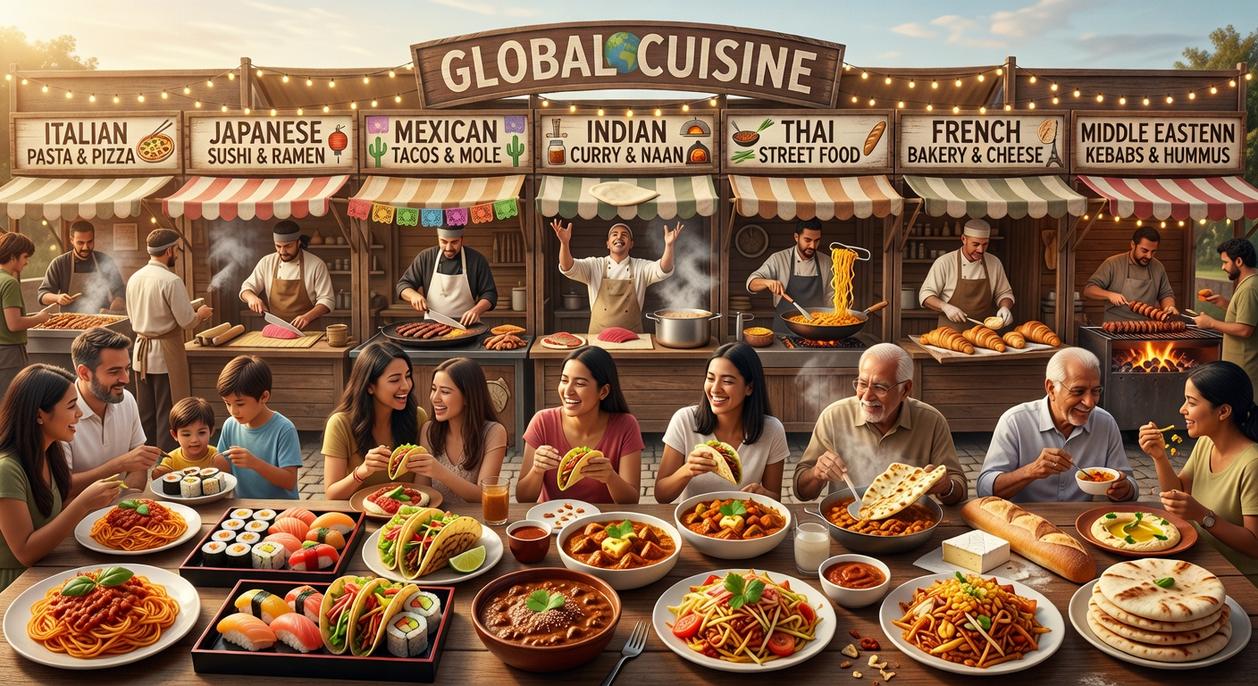
Ever wanted to travel the globe without leaving your kitchen? This guide is your starting point for discovering vibrant international flavors and learning how to cook dishes from around the world with confidence. Many home cooks feel intimidated by unfamiliar ingredients or techniques, assuming authentic global cuisine is out of reach. It doesn’t have to be. We break everything down into simple, manageable steps, focusing on foundational skills and versatile ingredients that open the door to dozens of cuisines. By the end, you’ll have the tools, techniques, and recipes you need to start creating bold, authentic international meals today.
The Universal Pantry: Building Your Global Flavor Base
You don’t need a wall of 100 spices to cook globally (unless you’re auditioning for a cooking show). What you need is a tight set of flavor bridges—ingredients that travel well across cuisines and connect dishes from different regions with ease.
The Essential Oils & Acids
High-quality olive oil, toasted sesame oil, rice vinegar, and fresh lemons or limes form your acid-fat backbone. Olive oil carries the grassy richness of Mediterranean dishes like pasta and grilled vegetables. Toasted sesame oil adds nutty depth to stir-fries and marinades. Rice vinegar brings gentle acidity to balance salty or spicy foods. Citrus brightens everything from tacos to noodle bowls. Acid sharpens flavor; fat carries it.
The Umami Foundation
Umami—the savory “fifth taste”—creates depth (think of it as flavor bass notes). Soy sauce or tamari, fish sauce, and tomato paste layer complexity into Italian ragu, Thai curries, and even chili. Some argue fish sauce is too pungent. In reality, used sparingly, it disappears into pure savoriness (pro tip: start with ½ teaspoon).
Aromatics & Spices
Garlic, ginger, onions, cumin, coriander, and smoked paprika are universal building blocks. Combine them differently and you move from Morocco to Mexico to India. Mastering these essentials makes it easier to experiment—and to confidently learn how to read and adapt international recipes.
Technique Over Tools: Three Skills to Master Any Cuisine
Walk into any kitchen store and you’ll see gadgets promising “restaurant-quality results.” Tempting, sure. But here’s the counterpoint: great cooking isn’t about owning a $300 blender. It’s about mastering technique—the repeatable skills that transfer across borders and ingredients.
Skill 1: The Art of the Sauté and Stir-Fry
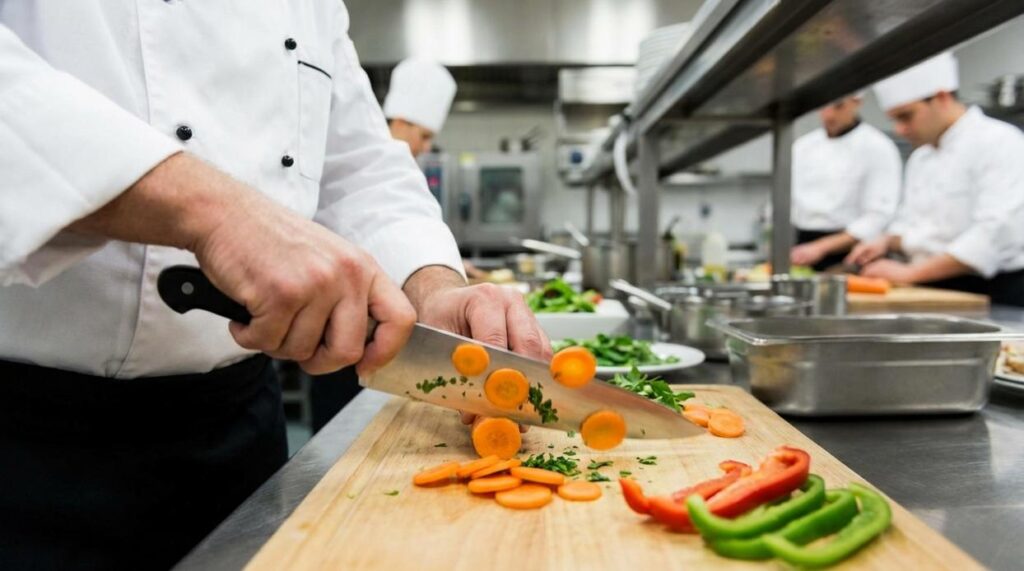
At its core, sautéing means cooking food quickly in a small amount of fat over relatively high, even heat. That heat triggers the Maillard reaction (the browning process that creates complex flavor, according to the Culinary Institute of America). French cuisine builds sauces on mirepoix; Italian dishes rely on soffritto; Chinese cooking perfects the high-heat toss of a wok. Different names, same principle. Control the heat, keep ingredients moving, and cut them uniformly for even cooking (pro tip: overcrowding the pan kills browning).
Some argue specialized woks or copper pans are essential. They help—but technique matters more than the logo on your cookware.
Skill 2: Mastering Flavor Balancing
Flavor balancing means adjusting sweet, sour, salty, savory (umami), and spicy elements until none dominates. Thai cuisine showcases this beautifully: palm sugar for sweetness, lime juice for acidity, fish sauce for salt and umami, chili for heat. The magic is harmony, not intensity. Think of it like a band—if the drummer overpowers everyone, the song falls apart.
Skill 3: Blooming Spices
Blooming spices involves heating whole or ground spices in hot oil to release fat-soluble aromatic compounds (Harold McGee, On Food and Cooking). This step anchors Indian curries, Mexican moles, and Middle Eastern stews. Skip it, and flavors taste flat. Master it, and suddenly your kitchen smells like a world tour (no plane ticket required).
Your First Culinary Journey: Three Authentic, Achievable Recipes
Cooking can feel intimidating at first. “What if I mess it up?” a friend once asked me while staring at a pot of boiling pasta. Fair question. Yet authentic food isn’t about perfection—it’s about understanding a few core principles and trusting your senses.
1. Italian Cacio e Pepe
At first glance, it’s just pasta, Pecorino Romano, and black pepper. “That’s it?” people often say. Yes—that’s it. The magic lies in emulsion (when fat and water bind into a creamy sauce). Cook pasta in salted water. Toast cracked pepper in a pan. Then toss hot pasta with grated cheese and a splash of starchy pasta water, stirring vigorously until silky.
Some argue it’s too simple to impress. I disagree. Simplicity exposes technique. If your sauce clumps, add more warm pasta water and keep tossing. Pro tip: remove the pan from direct heat before adding cheese to prevent separation.
2. Simple Thai Green Curry
Next, let’s talk balance. Start by sautéing store-bought green curry paste in oil. Add coconut milk, sliced chicken or tofu, and vegetables. Simmer gently.
Now comes the real lesson. “Taste it,” a Thai chef once told me. “Too salty? Too sweet? Fix it.” Adjust fish sauce (salty depth), lime juice (acid brightness), and a pinch of sugar (sweet balance). Flavor balancing means harmonizing salty, sweet, sour, and heat. Critics say shortcuts like store-bought paste aren’t authentic. However, authenticity also means understanding flavor logic—not grinding every spice by hand.
3. Authentic Mexican Guacamole
Finally, something fresh. Mash ripe avocados with lime juice, minced jalapeño, chopped cilantro, salt, and diced onion. That’s it. No sour cream (please).
Here you’re balancing fat (avocado) with acid (lime) and heat (jalapeño). Use the best produce you can find; freshness matters more than complexity.
Together, these recipes show how to cook dishes from around the world with confidence. And as someone once said while dipping a chip into fresh guacamole, “Okay… now I get it.”
Bringing the World to Your Kitchen Table
You began this journey believing it would be complicated to cook dishes from around the world. Exotic ingredients, unfamiliar techniques, and lengthy recipes may have made global cuisine feel intimidating and out of reach. But now you know better.
By mastering a few core techniques and stocking a versatile pantry, international cooking becomes approachable, practical, and exciting. The secret isn’t chasing complicated recipes—it’s building foundational skills that let authentic flavors shine. With the right staples on hand, simple dishes from different cultures are not only achievable, they’re enjoyable.
The world’s flavors are no longer distant—they’re waiting in your kitchen.
Don’t let hesitation keep you from experiencing them. Pick one recipe that excites you, head to the store for a few essential ingredients, and start cooking tonight. Thousands of home cooks have discovered how easy and rewarding global meals can be. Your culinary adventure begins the moment you turn on the stove—so take that first step now.

 There is a specific skill involved in explaining something clearly — one that is completely separate from actually knowing the subject. Mark Bowensouler has both. They has spent years working with world flavor inspirations in a hands-on capacity, and an equal amount of time figuring out how to translate that experience into writing that people with different backgrounds can actually absorb and use.
Mark tends to approach complex subjects — World Flavor Inspirations, Culinary Pulse, Cooking Technique Hacks being good examples — by starting with what the reader already knows, then building outward from there rather than dropping them in the deep end. It sounds like a small thing. In practice it makes a significant difference in whether someone finishes the article or abandons it halfway through. They is also good at knowing when to stop — a surprisingly underrated skill. Some writers bury useful information under so many caveats and qualifications that the point disappears. Mark knows where the point is and gets there without too many detours.
The practical effect of all this is that people who read Mark's work tend to come away actually capable of doing something with it. Not just vaguely informed — actually capable. For a writer working in world flavor inspirations, that is probably the best possible outcome, and it's the standard Mark holds they's own work to.
There is a specific skill involved in explaining something clearly — one that is completely separate from actually knowing the subject. Mark Bowensouler has both. They has spent years working with world flavor inspirations in a hands-on capacity, and an equal amount of time figuring out how to translate that experience into writing that people with different backgrounds can actually absorb and use.
Mark tends to approach complex subjects — World Flavor Inspirations, Culinary Pulse, Cooking Technique Hacks being good examples — by starting with what the reader already knows, then building outward from there rather than dropping them in the deep end. It sounds like a small thing. In practice it makes a significant difference in whether someone finishes the article or abandons it halfway through. They is also good at knowing when to stop — a surprisingly underrated skill. Some writers bury useful information under so many caveats and qualifications that the point disappears. Mark knows where the point is and gets there without too many detours.
The practical effect of all this is that people who read Mark's work tend to come away actually capable of doing something with it. Not just vaguely informed — actually capable. For a writer working in world flavor inspirations, that is probably the best possible outcome, and it's the standard Mark holds they's own work to.