If you’re searching for fresh inspiration to elevate your cooking with global flavors, you’re in the right place. This article is designed to help you explore essential world cuisines, discover creative cross-cultural combinations, and master practical techniques that bring international dishes to life in your own kitchen. Whether you’re curious about pantry staples from different regions or looking for standout fusion dessert ideas, you’ll find clear guidance rooted in culinary expertise and real-world testing.
We’ve drawn on insights from professional chefs, international food researchers, and time-tested cooking traditions to ensure every recommendation is both authentic and achievable. Instead of vague inspiration, you’ll get focused, actionable ideas that align with your goal: creating bold, memorable dishes with confidence. From flavor pairings to technique hacks, this guide shows you exactly how to turn global inspiration into unforgettable meals.
Beyond the Familiar: Desserts That Defy Borders
Stuck choosing between tiramisu or tres leches? That’s the rut. Instead, think matcha cannoli or chai-spiced crème brûlée—fusion dessert ideas that blend technique A with flavor B. Classic vs crossover comes down to comfort versus surprise.
- Italian cannoli vs Japanese matcha cannoli: ricotta richness meets earthy green tea.
- French crème brûlée vs Indian chai brûlée: silky custard layered with cardamom warmth.
- Mexican churros vs Korean hotteok churros: crispy coils stuffed with brown sugar and nuts.
Some argue tradition should stand alone. Fair. But balanced fusion respects both sides (no culinary identity crisis). Experiment.
Japanese Mochi Meets Italian Tiramisu: The Mochi-misu Bite
As global fusion desserts delight our taste buds with their inventive combinations and bold flavor twists, they also reflect the culinary shifts that are paving the way for the Top Food Trends Shaping Global Kitchens in 2026.
At first glance, wrapping tiramisu in mochi might sound like culinary heresy. After all, tiramisu is a beloved Italian classic, and mochi is a centuries-old Japanese confection. Some purists will argue that neither should be “messed with.” Fair point. But great food evolves—and when done thoughtfully, it becomes something even more memorable.
This Mochi-misu Bite delivers exactly that. Imagine a soft, chewy mochi shell (made from mochiko, or sweet rice flour) giving way to a chilled, espresso-spiked mascarpone cream. The contrast is the star: pillowy elasticity outside, luscious richness inside. It’s the kind of texture play that makes you pause mid-bite.
Here’s my recommendation: use the highest-quality mascarpone you can find. Authentic mascarpone is an Italian cream cheese known for its buttery smoothness, and lower-grade versions can taste flat. Likewise, brew strong espresso—not drip coffee—for a bold backbone that balances the sweetness of the rice dough. A light dusting of cocoa powder adds bitterness and aroma, while a teaspoon of amaretto or coffee liqueur deepens the flavor (think subtle, not boozy).
Technique matters. For foolproof mochi, use the microwave method: mix mochiko, sugar, and water, heat in short intervals, and stir until glossy and stretchy. The dough should be pliable but not sticky. Pro tip: chill your mascarpone filling into small scoops before wrapping—cold filling prevents tearing.
If you enjoy experimenting with fusion dessert ideas, this is one you should absolutely try. It’s playful, sophisticated, and surprisingly harmonious—like Tokyo meeting Rome for espresso.
Mexican Churros Meet Indian Gulab Jamun: Spiced Doughnuts in Saffron Syrup
When crispy Spanish-Mexican churros meet syrup-soaked Indian gulab jamun, something magical happens (and yes, it’s as indulgent as it sounds). This dessert borrows the ridged, golden crunch of a churro and infuses it with the fragrant sweetness of South Asia’s most beloved festival treat.
The Fusion Concept
At its core, this recipe transforms classic choux pastry—a light dough cooked before frying—into bite-sized churro pieces designed for soaking. Instead of rolling them in cinnamon sugar, they take a luxurious dip in saffron- and cardamom-infused syrup. Gulab jamun traditionally uses milk solids and absorbs syrup fully; here, we adapt that soaking method to fried dough with structure.
Some purists may argue churros should stay crisp and gulab jamun should stay soft. Fair. But combining textures creates contrast: crunch first, then aromatic syrup bloom. It’s the culinary equivalent of a crossover episode that actually works.
Why It Works
The churro’s ridges increase surface area, allowing more syrup absorption without collapse. Frying until deeply golden forms a hollow center, which acts like a sponge. The benefit? A dessert that’s crisp outside, tender inside, and layered with spice.
Key Ingredients & Technique
Green cardamom pods add citrusy warmth. High-quality saffron threads provide floral depth and golden hue (studies show saffron’s aroma compounds intensify in warm liquid). A splash of rose water finishes the syrup with authenticity.
Keep the syrup warm—not hot—during soaking to prevent sogginess. For more inspiration like this, explore creative asian mexican fusion dishes to try and expand your collection of fusion dessert ideas.
French Crème Brûlée Meets Thai Mango Sticky Rice: A Tropical Twist on a Classic

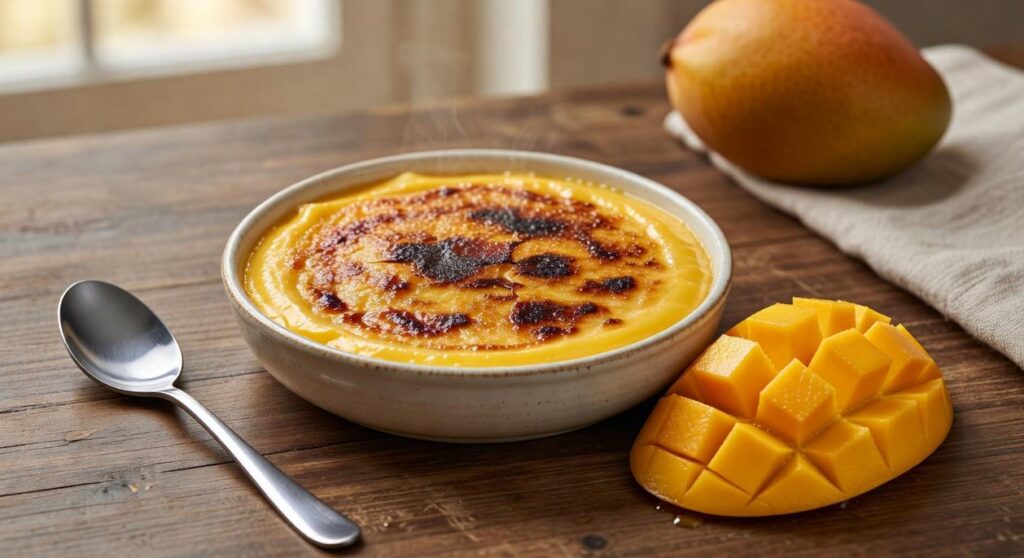
French technique meets Thai comfort in this tropical showstopper: a layer of coconut-infused sticky rice and ripe mango crowned with silky vanilla bean custard and a glassy brûléed top. On paper, it sounds like one of those ambitious fusion dessert ideas that could go very wrong (and, trust me, it can).
The concept is simple. Thai sweet rice—also called glutinous rice, a naturally sticky short-grain rice—gets simmered with full-fat coconut milk for richness. Slices of Ataulfo or Honey mango add floral sweetness. Over that goes a custard made from egg yolks and real vanilla bean, then finished with caramelized sugar cracked with the back of a spoon.
Here’s where I messed up the first time.
I poured warm custard over hot rice and skipped the water bath. The result? Curdled edges and a soggy base. A bain-marie (a water bath that gently regulates heat) isn’t optional—it ensures the custard sets evenly at around 170–175°F, preventing scrambled eggs in disguise (a heartbreaking sight).
Another lesson: chill thoroughly before torching. I once torched too soon, and the custard loosened under the heat. Let it firm up completely so the caramelized top contrasts with the cool, creamy layers beneath.
Why does it work when done right?
- Creamy coconut and mango echo the comfort of Thai mango sticky rice.
- The brûléed sugar adds a warm, brittle crunch.
- The temperature contrast keeps every bite dynamic.
Pro tip: sprinkle an even, thin sugar layer; too thick and you’ll get burnt bitterness instead of that signature crack.
Your Blueprint for Culinary Creativity
You came for inspiration, so here’s your next step. Dessert boredom ends when curiosity begins. The smartest cooks rely on fusion dessert ideas to pair comfort textures with bold global flavors—think creamy bases with spiced syrups or flaky crusts with tropical heat.
Follow this simple framework:
- Choose a familiar texture (cake, custard, pastry).
- Introduce one unexpected international flavor.
- Balance sweetness with spice, salt, or acidity.
If you’ve ever wondered why some creations taste flat, it’s usually imbalance. Adjust slowly, taste often, and trust contrast. Now head to the kitchen and create something unforgettable.
Bring Global Flavors Into Your Kitchen Tonight
You came here looking for creative ways to elevate your desserts with global inspiration—and now you have a world of ideas at your fingertips. From vibrant spices to unexpected ingredient pairings, these fusion dessert ideas give you the tools to transform ordinary sweets into unforgettable experiences.
If you’ve ever felt stuck making the same predictable treats, you’re not alone. Dessert ruts are real—and they’re frustrating. But with the right flavor combinations and simple technique upgrades, you can turn that frustration into excitement and confidence in the kitchen.
Now it’s time to act. Choose one of these fusion dessert ideas, gather your ingredients, and experiment with a bold new flavor profile this week. Start small, taste as you go, and don’t be afraid to mix cultures on one plate.
Ready to impress your guests and satisfy your creative cravings? Explore more global recipes and technique hacks today—and start crafting desserts that taste like a passport to the world.