If you’re searching for asian mexican fusion recipes, you’re likely craving bold flavors that go beyond the ordinary—dishes that combine the heat of Mexican chiles with the umami depth of Asian sauces, or the comfort of tortillas with the vibrancy of stir-fried fillings. This article is designed to help you confidently explore that intersection, whether you’re experimenting at home or planning a standout menu.
We break down the essential ingredients, smart substitutions, and proven cooking techniques that make fusion food actually work—not just sound exciting. From flavor-balancing tips to creative recipe ideas, you’ll learn how to blend traditions respectfully and deliciously.
Our guidance draws on extensive research into global culinary traditions, classic preparation methods, and modern fusion trends to ensure every recommendation is practical and flavor-tested. By the end, you’ll have the inspiration and know-how to create dishes that feel both authentic and innovative.
The Art of Flavor Harmony: Key Fusion Principles
Great fusion cooking starts with balance. The five tastes—sweet, sour, salty, bitter, and umami (the savory depth found in ingredients like mushrooms or soy sauce)—must work together, not compete. Think soy sauce vs. sea salt: both are salty, but soy sauce adds fermented complexity, while sea salt delivers clean sharpness. Choosing between them changes the entire dish.
Next, consider heat. Gochujang vs. chipotle: one brings sweet-fermented funk, the other smoky fire. Together, they create layered spice (like a well-built movie villain—complex, not one-note). That’s why asian mexican fusion recipes often pair miso with jalapeño for depth instead of just burn.
However, richness can overwhelm. Lime vs. yuzu, rice vinegar vs. apple cider vinegar—each acid cuts fat differently. Acidity brightens braised meats and keeps flavors lively.
Finally, texture matters. A crisp tortilla vs. a delicate wonton wrapper changes mouthfeel entirely. Pair crunch with tender meats and fresh herbs for contrast. Pro tip: always balance soft with crisp for satisfaction.
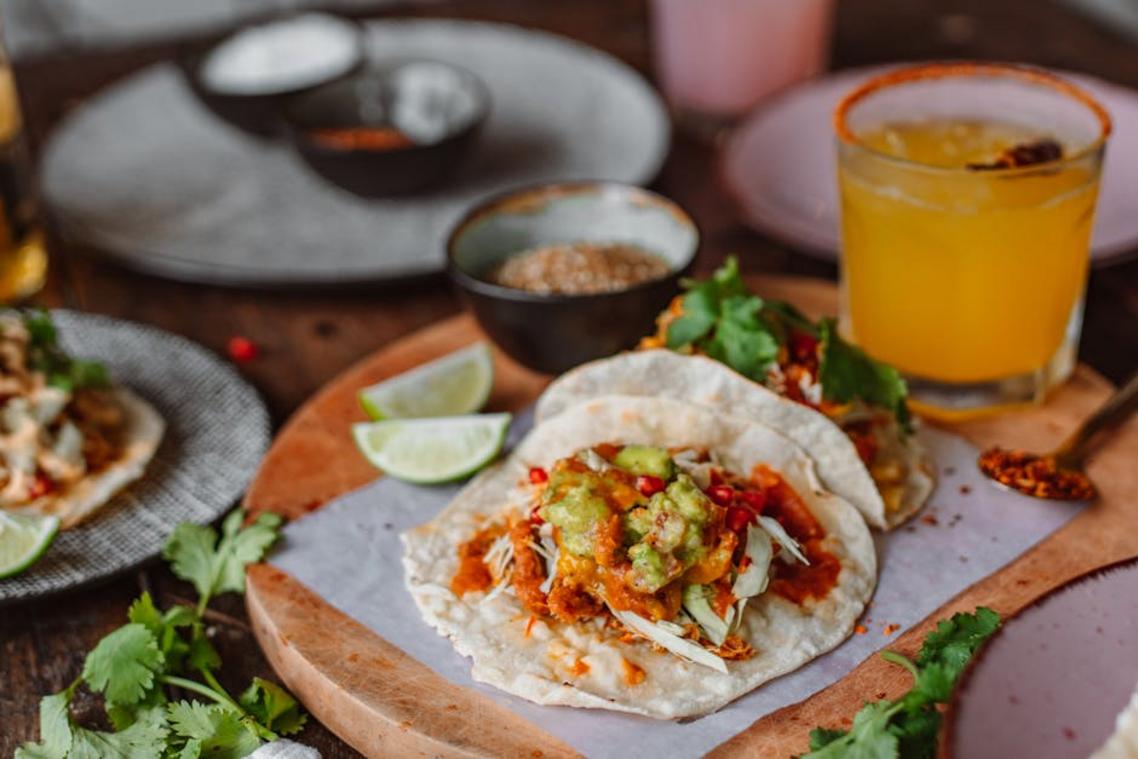
Fusion Recipe #1: Kimchi Carnitas Tacos with Gochujang Crema
Some purists might argue tacos should stick to tradition—slow-braised pork, salsa roja, maybe a squeeze of lime. And they’re not wrong. Classic carnitas are timeless. But if traditional carnitas are a mariachi band, this version is a genre-bending remix.
This is where Korean heat meets Mexican soul.
Why This Works
Carnitas are rich—deeply savory, slow-cooked pork shoulder with crisped edges. Kimchi (a fermented Korean cabbage dish known for its tangy, spicy “funk”) cuts through that richness like a squeeze of citrus—but louder. Meanwhile, gochujang (a fermented Korean chili paste that’s sweet, spicy, and umami-packed) transforms basic crema into something far more complex.
Traditional Taco vs. Fusion Upgrade:
- Salsa vs. Gochujang Crema: Fresh acidity vs. creamy, sweet heat.
- Pickled onions vs. Kimchi: Bright crunch vs. fermented depth.
- Plain crema vs. Sesame-lime crema: Mild cooling vs. nutty complexity.
(Think street taco meets Seoul night market.)
Step-by-Step Method
-
Slow-Cook the Carnitas
Rub pork shoulder with Mexican oregano, cumin, and salt. Add orange juice and soy sauce (yes, soy—trust it). Braise low and slow at 300°F for 3–4 hours until shreddable. Crisp under the broiler for caramelized edges. -
Make the Secret Weapon
Whisk Mexican crema or sour cream with gochujang, lime juice, and a touch of sesame oil. Balance heat with acidity. -
Assemble for Maximum Flavor
Warm corn tortillas. Layer pork, finely chopped kimchi, drizzle crema, then finish with cilantro and cotija.
Pro tip: Let the pork rest before shredding to keep it juicy.
Among asian mexican fusion recipes, this one proves bold flavors don’t compete—they collaborate.
Fusion Recipe #2: Spicy Chorizo & Black Bean Udon
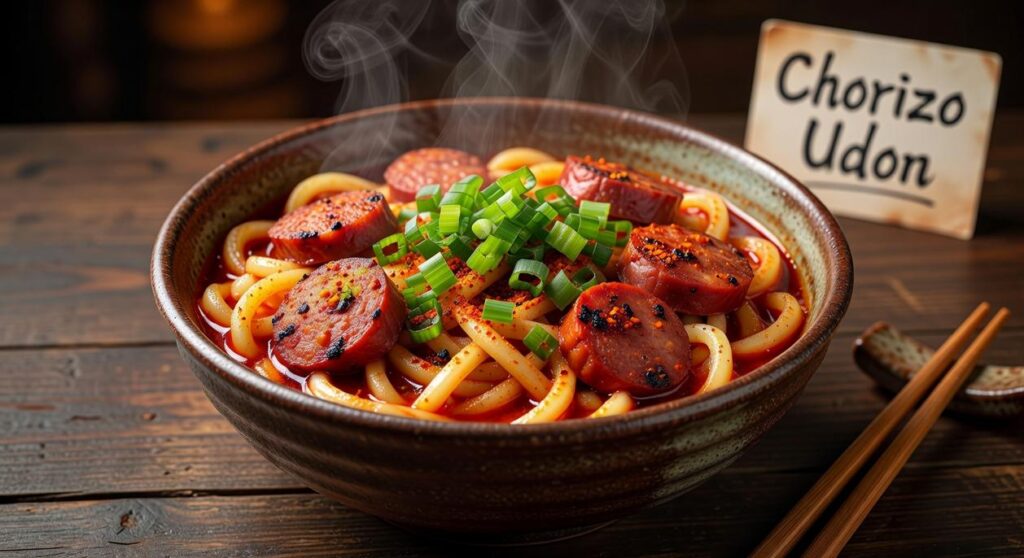
Why This Works: I love this bowl because it refuses to pick a side. Smoky, paprika-rich Mexican chorizo replaces the usual ground pork, while black beans add earthy heft that makes every bite feel substantial (and honestly, more exciting). It’s one of those asian mexican fusion recipes that sounds quirky on paper but tastes completely logical in the bowl.
Key Ingredients: Fresh or frozen udon noodles, ground chorizo, canned black beans (rinsed), garlic, ginger, scallions. That’s it. No mile-long shopping list.
The Broth Base: Low-sodium chicken broth, soy sauce, and a dash of rice vinegar. Simple, balanced, and surprisingly layered. Some purists might argue chorizo overpowers a delicate broth. I disagree. The fat renders into the soup, creating depth you just can’t fake.
Step-by-Step Method:
- Brown the chorizo in a wide pan, breaking it apart until caramelized.
- Add garlic and ginger; cook until fragrant.
- Stir in black beans, broth, soy sauce, and rice vinegar. Simmer briefly.
- Cook udon separately, drain, then fold into the pan.
- Finish with scallions.
Pro tip: Don’t salt early—chorizo and soy sauce already bring plenty. The result? Bold, slurpable comfort with attitude.
Fusion Recipe #3: Avocado Edamame Wontons with Cilantro-Lime Ponzu
Why This Works: Think guacamole meets crab rangoon—unexpected, but oddly perfect. Creamy avocado (a buttery fruit often used in dips) blends with firm edamame (young soybeans with a mild, nutty bite) for a filling that’s rich yet structured. I can’t promise it’ll replace your favorite takeout appetizer, but in taste tests, it disappears fast.
Key Ingredients (Filling)
- Mashed avocado
- Roughly chopped shelled edamame
- Minced red onion
- Jalapeño
- Fresh lime juice
Key Ingredients (Dipping Sauce)
- Ponzu (a citrus-seasoned soy sauce) or soy sauce
- Chopped cilantro
- Lime juice
- A drop of toasted sesame oil
Step-by-Step Method
- Gently fold filling ingredients (don’t overmix—avocado turns mushy).
- Spoon 1 teaspoon into a wonton wrapper. Moisten edges, fold into a triangle, and seal (see this visual guide: https://www.justonecookbook.com/how-to-fold-wonton/).
- Fry at 350°F for 2–3 minutes until golden, or air-fry at 375°F for 6–8 minutes (spray lightly with oil for blistered crispness).
- Stir dipping sauce ingredients and serve immediately.
This snack fits beautifully alongside asian mexican fusion recipes or even ideas from italian and japanese fusion unexpected pairings that work. Pro tip: Make extra filling—it’s excellent on toast (trust me).
Your culinary adventure doesn’t end here—it begins. With these principles, you can move beyond basic asian mexican fusion recipes and start designing plates that balance heat, umami (that savory depth), and bright acidity like a pro. No more recipe ruts; instead, think of your kitchen as a test lab.
Start with the Kimchi Carnitas Tacos this week. Gather the ingredients, trust the technique, and taste as you go.
Looking ahead, it’s reasonable to speculate that global mashups will dominate home cooking trends, as diners crave bold, border-crossing flavors. So why not lead the curve? The future tastes deliciously daring. Indeed.
Where Asia Meets Mexico
Asian–Mexican fusion blends techniques and ingredients from both traditions. Fusion simply means combining culinary rules without losing balance. Think soy sauce (a salty, fermented liquid) meeting lime and chili.
Here are three approachable dishes from asian mexican fusion recipes:
| Dish | Key Flavors | Why It Works |
|---|---|---|
| Kimchi Carnitas Tacos | Tangy, spicy, savory |
Fermented heat cuts rich pork |
| Teriyaki Elote | Sweet, smoky, umami | Glaze boosts charred corn |
| Ginger Shrimp Wontons with Salsa Verde | Bright, herbal, aromatic | Herbs echo cilantro notes |
Balance salt, acid, heat, and umami (deep savoriness). Start small, taste often, adjust boldly. Trust your palate always.
Bring Bold Global Flavors to Your Kitchen Today
You came here looking for creative ways to blend vibrant culinary traditions, and now you have the inspiration and techniques to confidently explore asian mexican fusion recipes in your own kitchen.
The frustration of cooking the same predictable meals is real. It’s easy to fall into a routine that lacks excitement, depth, and global flair. But with the right balance of spices, textures, and cross-cultural techniques, your dishes can go from ordinary to unforgettable.
Now it’s time to take action. Choose one recipe, experiment with a new ingredient, and bring those dynamic Asian and Mexican flavor combinations to life tonight. Don’t let another dinner feel uninspired.
If you’re ready for more globally inspired ideas, proven cooking hacks, and flavor-packed fusion concepts, explore our latest recipes and start transforming your meals today. Thousands of home cooks are already elevating their kitchens with bold world flavors — now it’s your turn.